Showing posts with label Beyerdynamic. Show all posts

Tuesday, 25 June 2019

Review Beyerdynamic Xelento Wireless In-Ear Headphones | Mobile Accessories


I'm not going to lie. I’m a huge Beyerdynamic fan. I initially bought the DT 1770 Pro for studio use. But it sounded so damn good, that I now use it just as much for listening enjoyment as I do for recording. And when the Aventho Wireless came out, I thought it blew every other Bluetooth headphone in that price range out of the water. So, I was very curious to see how far they could go with the Xelento. And I’m in love once again. Let’s explore what makes these buds so outstanding in this Beyerdynamic Xelento Wireless In-Ear Headphones Review.

Beyerdynamic Xelento Wireless In-Ear Headphones Review


IN the BOX

 Check It Out On Amazon

FIT

Perfect in this department. These light buds seal well to the contours of the ears without protruding out at all. They wires are designed to be worn around the ear. But Beyerdynamic avoids using memory wire. Rather, they angle the connectors to lean the wire in a curved direction. So, I find them much easier to put on than a Shure IEM, for example. That being said, sound isolation may not be as effective as a Shure earphones. But once you hear this buds, you won’t care.


DESIGN

The Xelento uses a single dynamic Tesla driver, which the same driver as in the Xelento wired model. The sturdy (and very pretty) silver-plated cable is the same as well. The cable has detachable MMCX connectors, so you can swap it out if you want to go wired, using the cable included in the box.

The Xelento Wireless employs aptX HD, which will gives you 24 bit Bluetooth transmission that approaches CD-like quality. (i.e. Not quite CD, but close). Of course, if you want to fully optimize your high resolution files, you’ll need to use the wired connection.

For you crazy folks who have problems getting sufficient volume from other wireless buds you’ve tries, rest assured that you’ll get the loudness you need from these babies. But be very careful kids. Audio46 wants your hearing to last long enough to buy the next pair.

Speaking of hearing loss, Beyerdynamic offer an app, MIY, that tests out your hearing and customizes the sound profile to compensate for any deficiencies you may have in certain frequencies.
Battery life is around 8 hours, which isn’t incredibly long by today’s standards. But as Lao Tzu said, the flame that burns twice as bright burns half as long.


SOUND


Overall Impressions: Fast, great separation and perfectly balanced. 


Lows

Unsurprisingly, you’ll hear the same bass presence in Xelento Wireless as you will from the wired model. That is, it has a satiating oomph, but maintains the skillful balance that Beyerdynamic is so famous for. Listening to pop, there was enough punch to do justice to the genre. And it’s one of the fastest wireless headphones I’ve ever heard. Kick drums, for example, were super tight and had tons of impact. Transparency is impressive as well, with cellos and acoustic bass instruments conveying plenty of texture and resolve. And playing a few rock tracks, the low end was well separated from the higher frequencies.

Mids

Again, in true Beyerdynamic fashion, you have a beautifully balanced and present midrange. Rock and pop-rock reveals the entire spectrum of sound in this range, giving the tracks a full-bodied feel. Listening to acoustic guitars, the separation was primo in the lower mids, where it can often get muddy, even in high performance wired headphones. In fact, like every Beyerdynamic model, separation might be one of its biggest strengths. And that speedy transient response is ever apparent in this range as well. Listening to John Lennon’s Watching The Wheels, the snare drum is extremely solid and disciplined. Moving on to classical, strings had ample detail for a wireless headphone. But of course, comparing it to the wired Xelento, it couldn't match it in terms of transparency. Rather, it presented a slightly smoother profile, which was still very pleasing to the ear.

Highs

You’ll hear impressive detail listening to strings in this range. But being such a neutral sound signature, you won’t get a tremendous amount of sparkle when listening to percussion instruments in this range. But I like that it doesn’t get too bright. That being said, it’s not rounded, and you’ll still hear that invigorating crispness you get from a tight sounding headphone.

Soundstage

A spacious soundstage with a sense of height and width that almost matches the wired Xelento model. The feeling of spaciousness is also just as good. Perhaps it has slightly less precision than the wired model. But the sense of dimension is still incredibly impressive, and it’s the best soundstage I’ve ever heard on a wireless headphone.

SUMMARY

These wireless IEMs are certainly the best I’ve ever tested with respect speed, detail, separation, balance and soundstage. The neutral sound signature also makes it thoroughly versatile in terms of genre. And it’s certainly the closest you can get to a critical listening experience for a Bluetooth headphone. If you have to go wire free, but you’re an uncompromising audiophile, I don’t think you can do better than the Xelento Wireless.

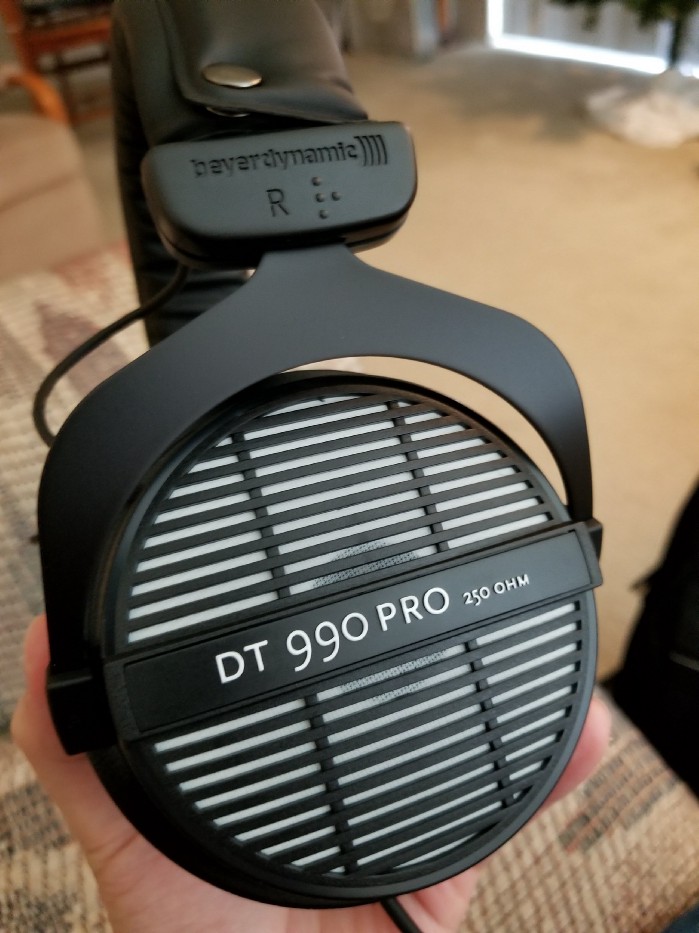
Review Beyerdynamic DT990 Pro 250 Ohm Headphones | Mobile Accessories

I tried to buy a pair of DT990’s once before, last summer. But they showed up with one of the pads damaged significantly.

I still listened to them for a few minutes…and it was a pretty great experience even with the stupidly-broken pad. I vowed to one day return to these headphones.

And now here we are.


No coffee shop shots this time. I’d feel terrible using these there. The DT990’s are so open that they’re really only suitable for home or studio use.


Check It Out On Amazon

OVERVIEW

Beyerdynamic’s open-backed DT990 headphones are rather polarizing due to their unique sound signature. They come in two versions, “Edition” and “Pro.”
The Edition model is designed primarily for home listening, and comes in 32 ohm, 250 ohm, and 600 ohm variants.

The Pro model currently only comes in a 250 ohm version. There’s a limited edition version with black ear pads and a straight cable…but the default version comes with classic Beyerdynamic grey ear pads and a coiled cable. The Pro model is targeted at mixing/mastering and critical listening use, and has a different build and slightly higher clamping force.

I chose the Pro version this time hoping that its packaging would protect my pads, and it did. The Pro version comes tightly wrapped up in a cardboard box, the same way the DT770 Pro is packaged. The Edition model comes in a soft carrying case, and the way the headphones sit in that case was the doom of my previous pair.

That’s a killer deal… if you’re the sort of person who will like their sound signature.


SOUND QUALITY

I don’t usually like open-backed headphones. They often lack the bass response I’m after.
I love the sound of the DT990’s. They’re an open-backed headphone, but with bass. And some other things people might hate. Where by other things I mean “aggressive treble.”

Critics of these headphones think that they’re too v-shaped. And that their treble will destroy your mind.

I can sort of see where they’re coming from. There’s a bit of aggression in both the bass and treble on the DT990’s. Most of the bass is in the lower midbass region, and subbass extension is weaker than the DT770’s. But these can still really thump.

The highs are also quite aggressive. To me, they’re just south of the fatigue point. However, I don’t listen that loud, and I’m not as bothered by shimmery treble as some people. I’m not going to sit here and tell you that the treble is “just fine.” It’s pretty darn aggressive, prominent, and even a bit sibilant on certain recordings…but as someone who already adapted to and enjoys the DT770’s, I still love it.

On first listen, I could immediately hear why these are so polarizing. They have a speed and character that’s a lot like the DT770, but with a bit more push in the bass and treble.

Fortunately, the mids are wonderful, musical, and accurate. It’s the amount of bass and treble here that will either make these winners or losers in your book.

Also, these do benefit from an amp. I was able to push them out of my MacBook cranked up a bit, but they’re revealing enough that I preferred how they sounded out of any of my small desktop amps. The difference isn’t huge. But if you need really high volumes or you’re a detail hound, you should consider an amp.

Some folks like to use tube amps to tone down the treble a bit, and again, I honestly can’t blame them even though I love the sound here.

 Obligatory Photo of comfy Beyerdynamic velour material

SOUNDSTAGE

The open-backed design and shouty treble work together to produce an excellent sense of depth, imaging, and soundstage. The DT990’s are a wonderful gaming headphone, and I’ve used them for many gaming sessions and quite enjoyed the experience.

Although I prefer the isolation of closed-back headphones, there’s no denying the extreme fun of the soundstage in these headphones. They’re some of the widest I’ve ever had the pleasure of hearing.

COMFORT/ISOLATION

I’m going to mention isolation first even though it’s second in the above heading.

There’s none! Zip! Zero!
These are very very open, and very very leaky also. Don’t use them in an outside-the-house capacity, and maybe don’t use them at high volumes if other people are in the room!
Comfort is wonderful in spite of the higher clamping force of the Pro model. The pads are made from a plush foam, and covered in Beyerdynamic’s trademark grey velour. They are softer than my DT770’s and more comfy. The softer foam is by design, since these don’t need to isolate and the 770’s do.

The cups have plenty of room for my ears, although I’ve seen some other folks report that they have a little contact between the back of their ear and the inside of the cup. The foam at the back of the cup is very soft, so this shouldn’t get to you too much.

The headband leatherette is softer than the leatherette on my 770’s, and feels more like the material used on the Custom One Pro headband. Neat!

I can wear these for hours without issue, and I have on several occasions.

 Being a Pro model, my DT990’s have the Beyerdynamic Pro-style headband pad, which is easily removable with these snaps.

BUILD/DESIGN

These look and feel almost exactly like a DT770 Pro, but with open-backed cups. That means the build is a good mix of textured plastic and metal, and is quite solid. Every part here is user-replaceable, and everything feels pretty darn robust.

The design is straight out of the 80’s.

I think the two-tone filter at the back of the ear cup, and the grill pattern on top of it, both give these a slightly classier look than the DT770’s. But if you’re not into something slightly big and studio-like, the Edition model might be more your thing design-wise.

EXTRAS/FEATURES

The DT990 Pros come with the same goofy nylon bag that the DT770’s come with, and also one 6.3mm adapter. And that’s it.

The cable material is nice and supple.

FINAL THOUGHTS

Are you looking for the slightly aggressive sound of the DT770’s but in an open-backed form? Does a sound signature with a fair bit of oomph in the bass and treble appeal to you?

If the answer to those questions is no, you will hate these.

But if, like me, you really love the DT770’s, then you’ll probably like these too.

I spent much longer doing listening tests on these than I normally do. I usually turn a review around a few days after buying a pair, but I’ve been living with these for a week and a half. I don’t have as many chances to use open headphones as closed-back ones, and I wanted to make sure I loved the sound here before I committed to the review.

It’s true that I have a tendency to like the Beyerdynamic house sound, and if you disagree with me and think these are too v-shaped or too treble-strong I can’t really blame you at all.

But man. These are fast, punchy, sparkly, wide open headphones. And I think they’re perfect for the critical listening applications that Beyerdyanmic pitches them for…and pretty fun for gaming, too. 

The emphasis areas are perfect for hearing the flaws in music/recordings, or for hearing footsteps and explosions in a video game.

I’d probably still recommend the 770’s over these, because their closed back design is more versatile for the traveling listener and their sound signature isn’t as aggressive. The Custom One Pro is also a better choice for folks that don’t want shouty treble.

I still love these and I’m still keeping them forever.

I have no idea how Beyerdynamic achieved this level of bass response on headphones that are so open. You can even hear the bass when you hold your ear up to the outside of the cup with music playing, so they’re doing some amazing work with the driver and enclosure here! It’s just not going to be to everyone’s taste.

But it really makes me happy.


Review: Beyerdynamic Byron Headphone sound more expensive than they really are | Mobile Accessories

The Byron does all things well, and doesn’t limit itself to any specific music genre.

Affordable earphones don't always have to be a compromise, and the Byron just proves that with resounding clarity


German premium audio brand Beyerdynamic is well known for high-end earphones and headphones. However, the more affordable price bands are something that the company isn’t ignoring anyway. The newest addition to the line-up are the Byron earphones, which are available in wired (Rs3,650) as well as wireless (called Byron BTA, priced at Rs15,350) options. It is the rather affordable price tag of the wired variant that would appeal to a much wider demographic of music enthusiasts.
The Byron’s total weight is 13 grams, making this one of the lightest earphones that you can buy.

Check It Out On Amazon

Design: Understated brilliance

Beyerdynamic earphones are never about the flashiest designs or bright colours. What you get is a very conventional and equally sophisticated combination of black and grey colours. Each earbud has a very standard round design language. These are lightweight too—the Byron’s total weight is 13 grams, making this one of the lightest earphones that you can buy. And it is not as if Beyerdynamic has compromised on the build quality either, because the Byron earphones have aluminum housing. 

There are three sizes of the silicone ear-tips with the Byron. You can easily clip on the ones that suit your ears best. If we are to nitpick, we can perhaps say that some earphones come with even more silicone eartip size options such as the A-Jays Two (priced at Rs3,499), but the ones that Beyerdynamic packages with the Byron will surely get the job done for most ear sizes and comfort levels. 

A lot of earphones are sacrificed at the altar of broken cables, which either get damaged near the 3.5mm jack or near either of the earbuds. We feel that the cable Beyerdynamic has bestowed upon the Byron is quite sturdy. One of the reasons for our belief is that it doesn’t twist or tangle itself like lesser quality earphone cables. This should be able to withstand some accidental tugs and rough use, and won’t break a sweat. The cable also has an in-line microphone (for managing your calls) and remote (useful to change volume).  


There are three sizes of the silicone ear-tips with the Byron. You can easily clip on the ones that suit your ears best.

Sound: All about the balance

The Byron has a closed back design, and the frequency response ranges from 10- 23,000 Hz. These will work with your Android phone, your iPhone and iPad, Windows laptop, MacBook and iMac and any MP3 player that you may own. The connectivity is through the 3.5mm headphone jack, which will plug into the music playback device. 

Plug these in, and you’ll realise soon enough that the sound signature that you get from Beyerdynamic’s neodymium audio drivers in each ear is quite smooth and balanced. This doesn’t lean towards vocals or bass specifically. However, the best part would perhaps be the fact that the mid-range frequencies are quite strong, which enhances the overall detailing of whatever track it is that you are listening to. While the sound signature remains neutral, the tweaks that Beyerdynamic has done make the Byron stand apart from rivals such as Sennheiser. First up, the sound isn’t exactly warm, but listening to this for hours on end is quite relaxing as there isn’t any sharp edge to the vocals or too heavy bass that might give you a headache.

No matter how high the volume, there always seems to be enough buffer left in the tank—at no stage do the Byron feel they have topped out in terms of volume, and there is always the feeling that it can be pushed even more. Clarity remains pristine even at high volume levels, which isn’t something that similarly priced earphones can truly be able to claim. 

Verdict: The perfect sound

The Beyerdynamic Byron, with a sticker price of Rs3,650, lands in a segment that is already quite overcrowded with competition. You have the A-Jays Two, which also offers a very rich and vibrant sound stage across genres of music, including good bass. Then there is the Sennheiser CX 3.00, which does well with vocals and an overall soft sound signature, but struggles comparatively with lower frequencies. The Byron does all things well, and doesn’t limit itself to any specific music genre. The powerful sound cannot be ignored, and in the case of most rivals, cannot be replicated too.

Review Beyerdynamic Beat Byrd Headphone | Mobile Accessories

  
Beyerdynamic Beat Byrd earphone review: these earphones offer a simple design with audio quality that sets them apart.


The Beyerdynamic Beat Byrd in-ear headphones look like any regular earphone. But looks can be deceiving. The German audio company seems to have lined this up for the Indian market given our love for heavy bass, a domain in which Sony has near monopoly now.


The Beyerdynamic Beat Byrd is a different earphone, given that it does not offer a mic or a remote to control volume. The focus is only on playing music the way it wants.

The design is simple, but the earpieces have a slightly angular shape which I have not encountered much. The two pieces fit perfectly into your ears and there are different silicone tips if you need some help adjusting.


 The design is simple, but the earpieces have a slightly angular shape which I have not encountere

Despite all this, it would be the audio quality that set these closed earphones apart. I started by listening to the Goli Sodave song from Maari 2 and knew within a few moments that this will certainly impress fans of Indian music.

Advertising
 
Then the new Ladki Aankh Maare version from Simmba reinforced this observation. The bass is punchy, but mellowed enough to wrap around your ears and not be irritating. Even for someone like me who does not enjoy too much bass, this headphone offers a sound profile that is more than palatable.

But then what about music that does not really need a bass boost? I tuned in to some Jagjit Singh and again the rich audio profile made it the silky smooth experience you expect a rendition by the master to be. The Bayerdynamic Beat Byrd works for all types of music, except with maybe the exception of hard rock. But then I don’t think anyone should listen to that genre.

Priced at Rs 2,199, the Beyerdynamic Beat Byrd is a good headphone for those who just want to enjoy their music. If you love bass, then picking this up from the large list of earphones on offer is easier.
 

Review Beyerdynamic DT770 250 Ohm Studio Headphone | Mobile Accessories

Beyerdynamic DT770 250 Ohm – A Studio Staple

The DT 770 has been around for a while and generally has found itself in many control rooms. It has many of the features one would look for in a monitor headphone – closed back, over-ear design with Beyerdynamic reputation behind it. Neither AKG nor Sennheiser have come up with worthy challengers, former’s K240 and K270 come close, but fall flat in terms of isolation and comfort. So, let’s see if the 250 Ohm DT 770 still has what it takes to be the go-to closed back for studios.


Pros

  • Priced reasonably
  • Feels sturdy and like they would last
Pros list with Sonarworks Reference correction
  • Noticeably improved balance and neutrality, overall THD is still within reason

Cons

  • Rather top-end heavy sound signature
  • The cable cannot be replaced
  • Hard to drive out of a laptop headphone out
  • Plastic used on the headphones feels a bit cheap

Use cases  

Recommended music genres:
Basically anything you’d like
Best use case:
Tracking and live sound engineering
Can be used for mixing with some referencing

Tech specs

Type
Closed back, Over-ear 
Impedance
250 Ohm
Distortion
< 0.2%
Frequency response
5 Hz to 35 kHz
Connector
3m coiled cable with 3.5 mm stereo jack 
Adapter
Includes 1/8″ to 1/4″ adapter
Weight
270 g (without cable)
Require headphone amp
Yes

Headphone amp

Yes, they do require an amp or audio interface to be run at louder volumes. The story with the DT 770 Pro’s just like with their cousin, the DT 880 Pro. Even though their nominal impedance is lower than that of HD 650, they are a tad less sensitive, hence will require a bit more juice.

 Check It Out On Amazon


Build quality

 Even though the construction is sturdy and the headband feels like it could last a good few years of extensive use, the overall feel is slightly on the cheaper side due to the use of brutal looking plastic for the ear-cups and headband adjustment mechanism. And the non-detachable cable is always a thing to consider when purchasing something for the long haul. If that gives out, you’re missing a session or two until someone resolders the cable. On the other hand the ear-pads can be replaced and even swapped to pleather for more isolation, but bit less comfort. Do keep in mind that this alters both the aesthetics and sound of the DT 770 Pro.

Sound


The DT 770 Pro carries on the trend of what we call a “typical Beyer sound” – a very decent bass response followed by strangely carved-out midrange, topped off with an odd bump going all the way from 3.5kHz to 9kHz. This means that you’ll get too much focus on the details like cymbals and vocal presence, leaving out all important midrange character, specially when listening to something with guitars in the mix. Also, they can induce ear-fatigue pretty quickly. However, we do see benefit of this in live sound applications where you really want to get all of the top end under control to avoid feedback loop which can be a quick showstopper.


Channel balance

The DT 770 Pro has an OK balance between Left and Right channels. Even though this model doesn’t have weird dips or peaks in one of the channels, the stereo image is still a bit skewed – differences are throughout the whole frequency spectrum. Luckily the bigger differences are mostly isolated in a very narrow area and aren’t too noticeable.


Comfort

It’s a decent 8 in our books! They stay tightly on your head, without pressing on your skull to keep them in place. The headband adjustment could be smoother – a quick adjustment while keeping them on your head can be quite a challenge. Other than that – DT 770 Pro is very comfortable to wear even for a longer period of time and that is mostly due to the fact that the ear-pads are large enough to go around your ears and not press against them.


Value

At this price point, which at the time of writing  is 150€/180$, the market is rather saturated with options left and right. This model will give the rest of the competition a bit of a run for their money in terms of comfort, possible longevity and sound isolation due to their construction, although, sound wise there are better options out there.

Observations on how headphones perform after applying Sonarworks Reference correction  

Total Harmonic Distortion


Typical for a dynamic headphone from nineties, the driver will distort once it goes into high excursion due to low frequency content or high SPL. This distortion dips below 1% only at around 105Hz (when measured at high output levels), and throughout all of this, a nasty 3rd harmonic is very present from 60Hz to 100Hz so, when doing anything low-end critical, be careful as this is also present without calibration applied!

How accurate and consistent is the correction effect among different listeners? 
The DT 770 Pro overall is a consistent model in terms of translation. The only exception is low-end – for this model it is very tricky to calibrate. Probably due to their bass reflex system it makes it hard to pinpoint specific problem areas within the bass region that needs to be attenuated thus results from head to head may differ.

How much do they differ pair to pair in terms of frequency response? These headphones are one of the more consistent ones that we’ve measured and even though the difference especially in the bass region can span across ~6dB, the rest of the spectrum is well within reason. Glad to see a major headphone manufacturer keeping their quality check up to standard.

Conclusion

Durable, lightweight, sits comfortably on the head and most of the parts are replaceable. Top end gets rather harsh and fatigue can set in quickly.

Sunday, 23 June 2019

Review The Best Beyerdynamic Amiron wireless Headphones | Mobile Accessories


Introduction: Beyerdynamic, a name in all fields of audio that truly needs no introduction. In fact, since it has been established in 1924, the oldest currently still operating audio company, they have had their go at products ranging from microphones, home audio, wireless systems, and of course personal audio. My father even used a Beyerdynamic mic when he performed with his band in the 70's. Beyerdynamic in the headphone world has had their share of ubiquitous names, with popular models like the 770 and 990 families that until now provide great sound and great value to many music enthusiasts around the world, but what we have here today is the Amiron wireless, one of their entries into the current movement into the wireless audio spectrum. And speaking about wireless audio, it's a very interesting market where for the longest time wireless audio has been associated with poor sound quality, but with the advent of more and more high-quality codecs such as Aptx HD and LDAC promising, and for the most part, providing high-quality wireless audio solutions with a, for me at least, obviously discernable improvement over the likes of SBC. So what does the Amiron offer? Well for a start there's the circumaural/over-ear form factor, an important distinction in a market generally proliferated with supraaural/on-ear varieties. Additionally, these feature the Tesla Technology that is implemented in their other popular models like the Xelento, Amiron Home, T1, 1770, and 1990. On top of that, the Amiron Wireless offers Aptx and Aptx HD codec support and the Beyerdynamic MIY app that with the help of Mimi a German hearing technology company will measure your hearing and then adapt the sound output of the Amiron to achieve the "optimum" frequency response in wireless applications. At an eye-opening $699 what does the Amiron bring to the table? Read on to find out.

Check It Out On Amazon


Specifications:

Transducer type . . . . . . . . . . . . . . . . dynamic, Tesla

Operating prinicple . . . . . . . . . . . . . closed

Frequency response . . . . . . . . . . . . . 5 – 40,000 Hz (wired

operation)

Nominal impedance . . . . . . . . . . . . . 32 Ω

Nominal SPL with jack plug cable . . 100 dB SPL (1 mW / 500 Hz)

Nominal power handling capacity . . 200 mW

T.H.D . . . . . . . . . . . . . . . . . . . . . . . . < 0.05% @ 500 Hz

Sound coupling to the ear . . . . . . . . circumaural

Cable length and connector. . . . . . . 1.2 m, detachable,

4-pole mini stereo jack

(3.5 mm)

Bluetooth version . . . . . . . . . . . . . . . 4.2

Frequency range. . . . . . . . . . . . . . . . 2.4000 – 2.4835 GHz

Power class . . . . . . . . . . . . . . . . . . . 2.0

Supported profiles . . . . . . . . . . . . . . HSP, HFP, A2DP, AVRCP, GAVDP

Supported codecs . . . . . . . . . . . . . . aptX™, aptX™ LL, aptX™ HD,

AAC, SBC

Operating range. . . . . . . . . . . . . . . . up to 10 m

Battery runtime . . . . . . . . . . . . . . . . > 30 hrs.

Charging time . . . . . . . . . . . . . . . . . 2 hrs.

Battery capacity . . . . . . . . . . . . . . . . 1050 mAh

Charging port . . . . . . . . . . . . . . . . . USB-C

Operating temperature. . . . . . . . . . . 0 – 40 °C

Weight without cable. . . . . . . . . . . . 380 g


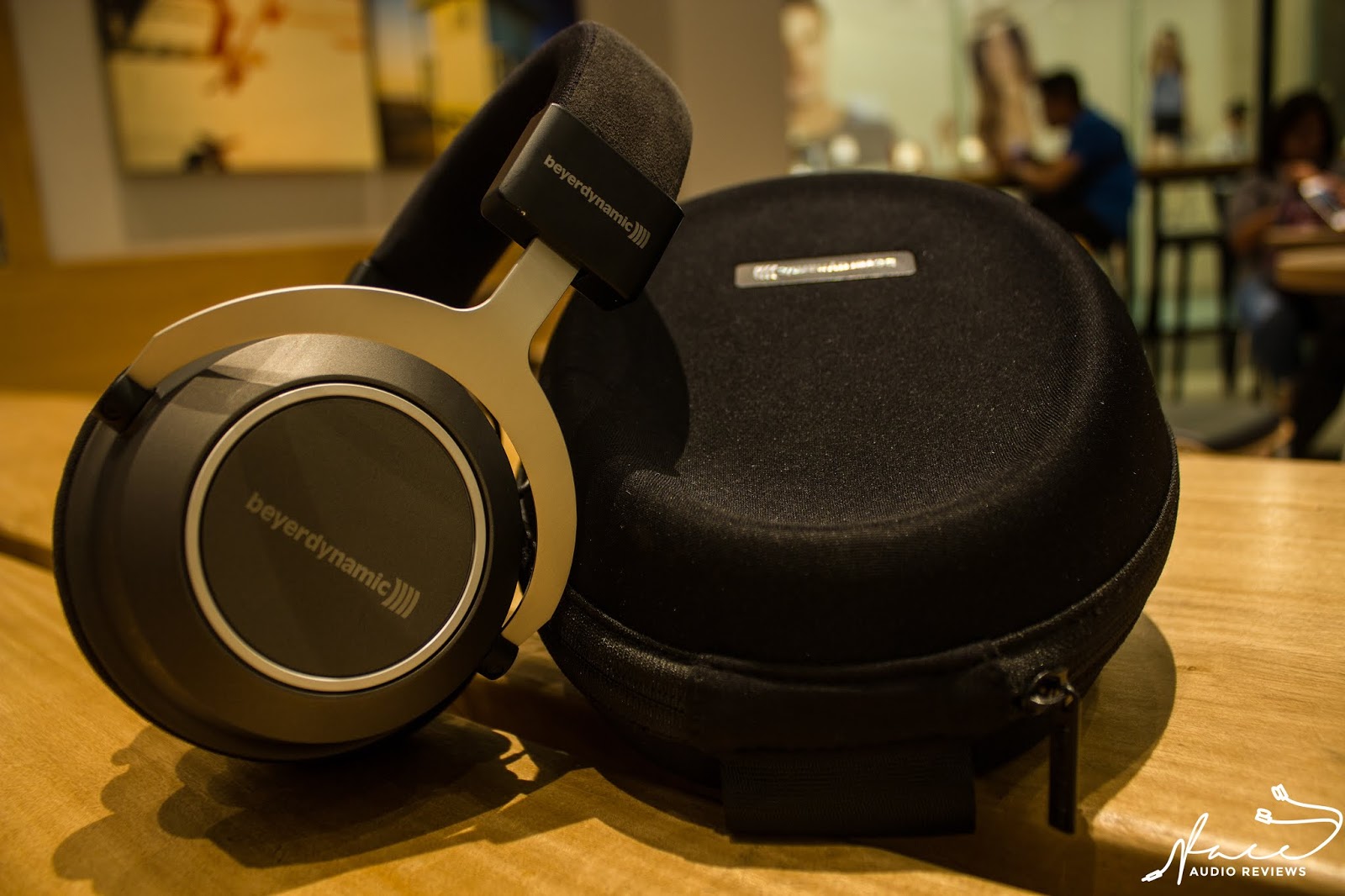
Packaging and Accessories: The Amiron comes in a rather large box, that is, however, to be expected given the size of these headphones. On the box is the basic specs of the headphones as well as some images of the product, opening the box reveals the large molded clamshell case of the Amiron. Inside you find the Amiron, a USB A to USB Type-C charger cable, and a 3.5mm cable with inline controls. The molded clamshell case is very nice with a soft touch finish and the Beyerdynamic logo tag on the front and a black zipper and is very sturdy and should protect the Amiron from bumps and light falls. The inside has a small net mesh pocket to place little objects, though it is a bit too small for either cable to be placed in there. The cable quality for both the USB and the 3.5mm cable is about the same, as they both have the same type of coating a smooth, slightly rubbery but not tacky coating that does, however, prevent either cable from tangling. Overall the Amiron has a utilitarian package that provides everything you need in the package without anything superfluous. Some might argue that the accouterments are lacking given the premium price, but as long as the rest of the product delivers, I personally see no issue with it.


Build Quality and Design: The build quality is superb. Starting with the headband there is a metal frame, that is more than adequately padded and lined with breathable mesh fabric on the underside while the top is layered with an Alcantara finish with the Beyerdynamic logo stamped on top. The Alcantara is done in a dark gray. The headband transition into the plastic piece where the yoke of the headphones adjust from, its a satin piece of plastic with another printing of the Beyerdynamic logo on the outside, and Left/Right markings as well as other model information printed inside, with the model number is engraved in gold paint to add an extra touch of class while cabling travels from the earcup to this piece to travel under the headband. The yoke itself is a single piece of brushed metal that connects to a rotating plastic joint on both earcups that allow a couple of degrees of tilt up and down and allows 11 steps of adjustment for overall size. The earcups themselves are done in mostly in an almost gunmetal gray, with silver metal adorning a ring around the main face of each earcup. The earpads are of the velour type, and the drivers have a fabric cover similar to that of the headband. Overall a premium but understated design with hints of industrial influences here and there, that primarily focuses on function, being a wireless and of course possibly a more mobile headphone, it eschews heavy materials like metal earcups to reduce the weight if one were to wear it on the go, or for long periods of time. To round things out the right earcup houses a USB-C charging port, a 3.5mm jack, and the entire face of the cup is a touch panel for use when in Bluetooth mode as well as a power/connect button that also has an LED that will indicate power status, as well as pairing status of the headphones. With no gaps, creaky parts, or anything that seems loose or ill-fitting, there really isn't anything you can point out from these except that they are exceptional.


Fit and Isolation: The Amiron has a moderate to light clamping force that does not wear on you even over longer periods of wear. This combined with the adequate padding on the earcups and headband provides a good comfort experience that couples with adequate breathability. However due to the lighter clamping force even though it is closed the isolation isn't as good as other closed back models, so this may be a trade-off and may be a pro or a con depending on your individual use case.


Connectivity and Interface: The Amiron supports SBC, AAC, Aptx, Aptx HD, and Aptx LL, which basically covers most the popular audio codecs with the only real notable exception being Sony LDAC, this means that for basically any device out there the Amiron will work, and for most modern devices the Amiron will work very well since Aptx HD support is becoming more commonplace, and with the LL Low Latency Standard included using the Amirons for streaming is a treat since it while ensuring that lip movements are synced with the audio. With 8 total devices it can pair within memory the connection interface and procedure is very simple and intuitive with a single button controlling both power and pairing with lights to indicate if it is in pairing mode, with matching audio prompts on pairing, battery percentage, and codec used alternatively if your devices support NFC the Amiron can also connect via that method, and you don't even need to set it to pairing mode to do so. The Amiron also features a right earcup touchpad that allows you to control playback as well as other functions, double taps to play or pause, swipes forward and backward to skip or go back on tracks, a swipe and hold to fast forward or rewind the current track, swipe up and down for volume control, and even one second long taps to answer or end calls, two seconds to reject one, and a one second hold to bring up the supported virtual assistant like Google, or Siri if supported by your device. I found the experience with the touchpad very pleasant, not buggy or finicky like I had feared. You can also adjust the touch sensitivity in the MIY app which I discuss below.


MIY App: The MIY app is the companion app that comes with Beyerdynamic Bluetooth devices that have a few capabilities, first and foremost the sound optimization feature that will take your age, and a listening test and will tailor the sound. The other features are software updates and listening monitoring that is there to make sure you don't over-fatigue your ears. The app has a clean look that makes it very pleasant coupled with a generally uncluttered interface that makes navigating the different options a breeze, though the pairing of the headphones in the app can sometimes be finicky, and non-intuitive which I'm sure can simply be addressed in software updates. Overall I do like the MIY app because it is a companion app that isn't all fluff and gimmicks and makes managing Bluetooth devices even easier.

Sound: I listened to the Amiron both wireless and wired over a myriad of devices almost exclusively using Aptx or Aptx HD for Bluetooth ranging from laptops to phones like my LG G6, or OnePlus 5T, and iPhone 7s+, to DAPs like the Hiby R6. Wired they were plugged into the R6, G6, ifi xDSD, or the xDSD amped with the Massdrop CTH the Amiron is very easy to drive and remained consistent throughout the different devices I plugged it into. I originally planned to split my sound impressions between wired and Bluetooth, but remarkably the sound whether wired or wireless remained almost completely consistent, the MIY app sound optimizations notwithstanding which for the most part make the mids a little fuller and forward at 100%, but I will get to that in a second, the sound signature of the Amiron is balanced and natural exhibiting accurate bass, full mids, and natural treble. Back to the MIY app, it conducts a listening test with test tones that takes about 6 minutes and optimizes the sound, when in the app you get an option to adjust the optimizations from 20% to 100% though I wish a 0% slider was available for convenience. Detailed sound impressions below.


Bass: The bass on the Amiron is full, and well extended with a quick attack and a moderate decay that keeps it precise and natural, hitting all the notes well and providing a good sense of rumble and impact, while still having articulation for faster double bass tracks. In Love by Lana Del Rey the prominent bass drum hits are felt but don't linger too long or drag, and the bass line of David Cook's rendition of Day Tripper has a fullness and texture, without ever feeling bloated in relation to the other signatures. All of this is a stark contrast to many commercially available Bluetooth headphones with dark signatures or even bloated bass that really go and mask the overall sound. The Amiron doesn't have any of those qualities and instead just providing enough bass to keep the sound from being boring but at the same time providing such great quality in terms of texture and refinement.


Mids: The midrange, on the other hand, is overall transparent if maybe a touch behind the bass without being crowded out. It reproduces vocals and instruments with very good timbre as well as backing it up with good technical ability. In City of Stars, a simple arrangement with nothing for the mids to hide behind the vocals are clear and detailed with good definition and crispness to the reproduction, the piano accompaniment is similarly well done, providing a pleasant fullness to each individual notes as they cut through the chords of the song. Moving on to something more aggressive What A Catch, Donnie by Fall Out Boy, the Amiron continues to deliver in both the solemn and basic intro to the more complex pieces in the chorus, and bridge, song elements don't get lost in the shuffle and manage to be rendered with articulation even on secondary song elements. The transition between bass and midrange as well as that to the treble are smooth and no awkward and disjointed dips or peaks in those areas could be detected.


Treble: The treble presents itself as clean, crisp, and with good extension. I found no manifestations of sibilance or uncomfortable peaks in the usual areas I expect them to be, and overall round out the signature with great clarity that brings an overall tonal balance to the headphones. In Hibike by Yokoyama Masaru the piano and string parts in this instrumental exhibit the sparkle of the top end on the headphones with each note resonating and lingering just a bit before they fade away. There is good overall air and that lends positively to the spacing of the music presented and just lifts everything to let the individual components breathe.

Presentation: This is another area where the Amiron shines, all around the technical aspects are excellent. The layering of notes even in complex arrangements is superb with the strings, winds, and percussion harmoniously combining. The spatial presentation is accurate and 3D staging is very good being able to present a somewhat holographic image of the music, however, it doesn't feel artificial or hollow like some may do, it's just right with auxiliary notes like tambourine shakes just at the far edges of the spatial field. Consequently, the soundstage presents good width as well a depth that is both partly in concert as to the previously mentioned staging, and when listening to especially spatially tracked recording it can really express the capability.


Conclusion: The Amiron is an impressive accomplishment by Beyerdynamic putting together a headphone that excels both wired or wireless and with a sound signature that is natural but has enough life to be engaging, without trying to mask any deficiencies with muddled software, at least that's what the wired performance delivered. So the sound is nigh unassailable in the realm of Bluetooth options, and at the least can stand on its own two feet vs traditional wired options. But in addition to that, it also brings together a bevy of convenience features and an overall sense of quality fit and finish that leaves little to be desired. Looking at what is left to be desired, the lack of the ANC is a shame at this price point especially with ANC being the new "it" feature to look for in Bluetooth headphones, it would have been something that would have undoubtedly raised the value proposition of the Amiron, and really is something that can't be ignored especially when they do already implement some "secret sauce" with the MIY app. But aside from that there really isn't much to pick at the Amiron on, the sound is sublime, the build is superb, battery life that usually met at least 30 hours, and the design is attractive but not gaudy, it is understated in how it exudes its premium nature, and personally that aesthetic is something I prefer, but I know is different for everyone. Overall the Amiron provides a great package for those looking for as little compromises in sound as possible at this point in time, something with a very traditional sound profile that focuses on quality first, and if you're in the market for simply the best sounding over ear Bluetooth headphones on the market, then I feel like the Amiron should be very much on the top of your shortlist.